Best for
- People starting a language in January 2027
- Returning learners rebuilding a routine
- Learners deciding whether a New Year app purchase fits
Watch for
- A yearly aspiration can hide an undefined weekly action
- A subscription is not a study plan
- CEFR and fluency claims require evidence beyond completed app units
Record a baseline before 1 January
Choose a task that matches the real goal: understand the main point of a short clip, read a page with limited lookup, introduce yourself without a script or handle one travel exchange. Complete it now and record the support required.
The baseline prevents vague claims of being ‘better’. Repeat the same task at each checkpoint with comparable topic, length and support.
Choose one 12-week outcome
Translate the yearly ambition into one result that can be observed by late March. The outcome can combine several skills, but one must be primary enough to determine the weekly method.
Use the CEFR Progress Planner only as a cautious workload aid. A self-assessed level and an app's course label are not certification, and no date guarantees a proficiency result.
- Listening: follow the main message with less transcript support.
- Conversation: sustain a prepared topic and repair misunderstandings.
- Reading: complete a defined text type with fewer blocking lookups.
Build the minimum viable week
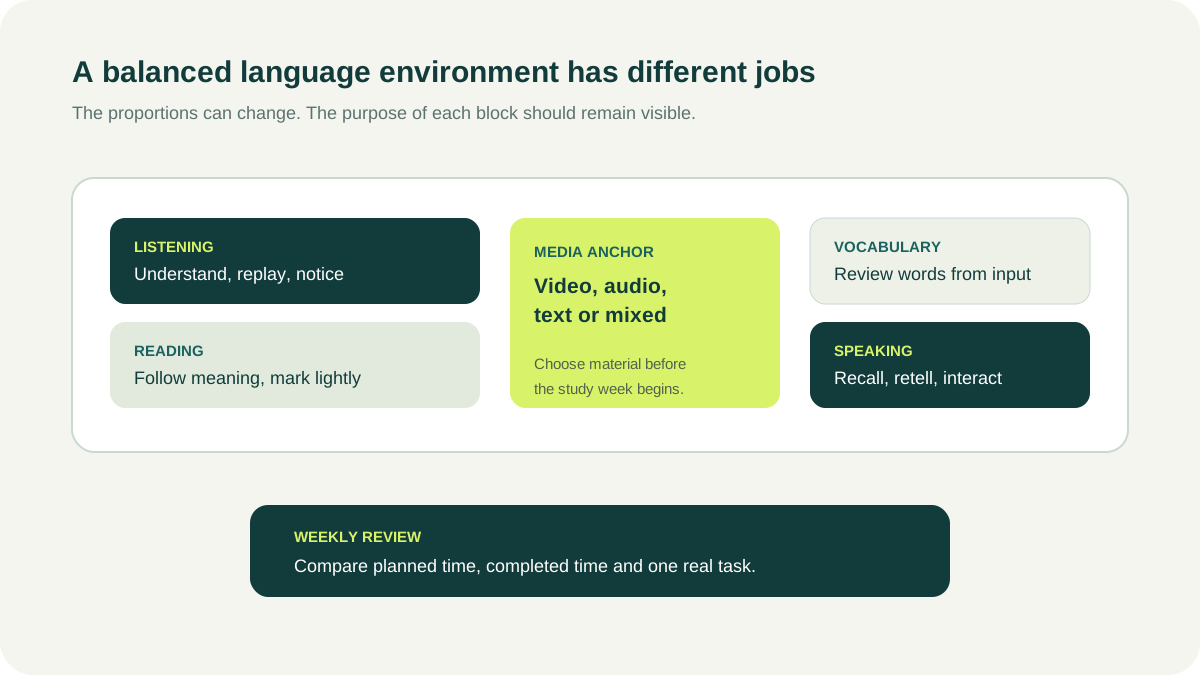
Set a minimum session that survives a difficult day and one or two deeper blocks for extended input, guided lessons or conversation. Use the Listening Input Calculator for exact time totals and the Language Environment Planner to divide the full week.
Preselect the lesson, audio, text or conversation topic. Removing setup decisions is part of the plan, not a separate productivity trick.
Buy only the method the plan requires
Use the Method Finder after the goal and weekly constraint are defined. A structured course, open input library, audio programme and tutor solve different jobs; their feature lists are not interchangeable.
Start with one primary system. Add a second paid product only when it owns a separate recurring task and the free or existing route cannot perform that job.
Review in weeks 2, 6 and 12
Week 2 tests friction: did the planned sessions actually happen? Week 6 tests direction: is the chosen activity training the target task? Week 12 repeats the baseline and decides whether to continue, change the method or raise difficulty.
Keep the successful behaviour even if the product changes. A new interface is not progress unless the observable task improves or the routine becomes meaningfully easier to sustain.
Choose the first-quarter method before the subscription
A January goal does not require a new paid account. Use the comparison only after the baseline identifies reading, listening or video input as the missing activity; keep the existing stack when it already covers that job.
Decision criteria
Primary sources
Material claims link to primary or authoritative sources. A link is not an endorsement.