Weekly study planner
Language Environment Planner
Divide your available time into a balanced, personalised mix of understandable input and active use.
Shape your language environment
Choose time, level, media and the skills that need more attention.
Your weekly structure
A repeatable allocation, not a guaranteed level timeline.
Your plan will appear here
We will divide each study day into complementary activities.
Use the result well
How to turn this estimate into a decision
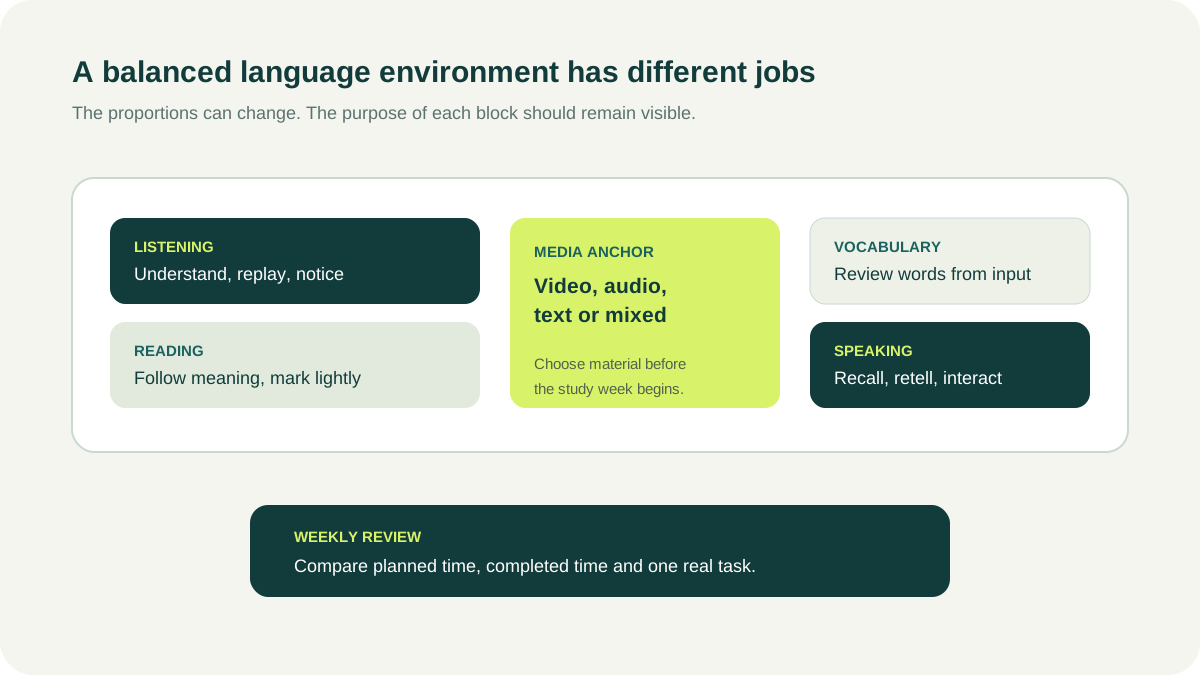
Why the planner keeps four activities
Listening and reading supply different forms of input. Vocabulary review should come from material you actually met. Speaking adds retrieval and interaction when active use is part of the goal.
The level, selected media and priority skills change the allocation, but every plan retains a small share for each activity. That prevents a preference from silently removing a useful complementary task.
- Beginners receive more structure and vocabulary support.
- Intermediate plans shift more time toward extended input.
- Advanced plans keep substantial input while raising active use.
Use preferred media as an anchor
Video gives listening a visual context and often adds subtitle-supported reading. Audio gives more weight to listening. Text gives more weight to reading and vocabulary collected from context. Mixed media leaves the base balance intact.
Choose real material before the week begins. A plan is easier to execute when the next episode, podcast, story or conversation topic is already selected.
Review the environment, not just the hours
At the end of the week, compare planned and completed minutes, then inspect one comprehension or output task. If the plan repeatedly fails, reduce setup friction or session size before adding another service.
This tool uses ‘language environment’ for independent home study. It does not claim to reproduce a formal educational immersion programme or guarantee fluency.
Planning tools provide decision support, not a promise of a learning outcome.