Evidence-aware planner
CEFR Progress Planner
Estimate a study workload between self-assessed CEFR levels using transparent, cautious guided-learning ranges.
Set a planning range
Use self-assessed levels for planning, not certification.
Planning estimate
Based on published Cambridge English guided-learning ranges.
Choose a level step and schedule
We will convert the published hour range into a weekly planning window.
Choose the activity before buying another app
The planning range is not a product recommendation. Start with your current skill gap; a longer estimate alone is no reason to buy another subscription.
Watch the quick explanation · 36 sec
Plan with a range, not a promise
This short explanation uses B1 to B2 and a 30-minute daily study habit to show why a planning range is more useful than a promised deadline. Use the planner above with your own starting point and weekly schedule.
Loading the player connects to YouTube (Google), which may process device and usage data. The player stays off until you choose to load it.
Use the result well
How to turn this estimate into a decision
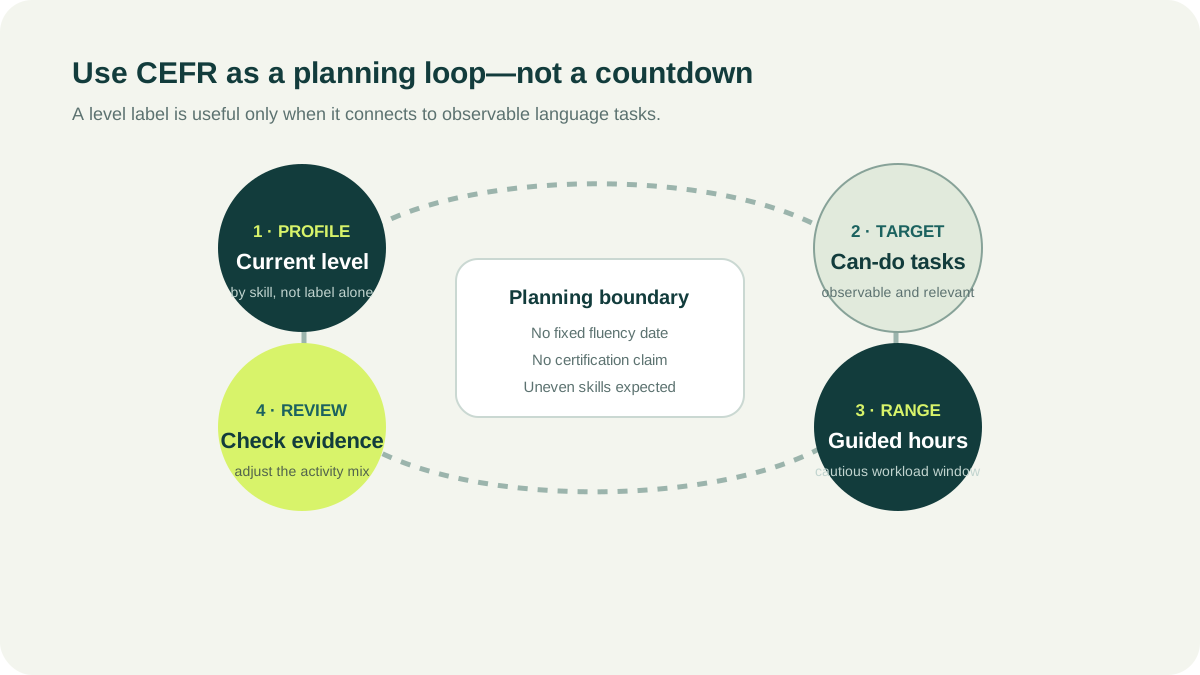
Read the range as workload, not a deadline
The calculator subtracts published cumulative guided-learning ranges for the selected levels and divides the result by your weekly guided-study time. The wider result is intentional: a single date would imply precision the source does not support.
Cambridge English publishes these estimates for English. Language distance, prior learning, intensity, age and exposure outside guided study can all change the workload for another language.
- Do not use the result as a fluency promise.
- Do not treat self-assessment as certification.
- Do not assume every skill moves at the same speed.
Turn a level into can-do tasks
CEFR describes language activity across reception, production, interaction and mediation. Choose a few observable tasks that matter to your goal—for example, following the main points of a familiar podcast or sustaining a prepared work conversation.
Record the support required. Completing a task with a transcript, repeated playback or preparation is different from completing it spontaneously, but reduced support over time is still useful evidence of progress.
Review before the end of the estimate
Set a short checkpoint rather than waiting for the full planning window. Compare completed guided hours, real can-do performance and the weakest skill. Adjust the activity mix before increasing the total time.
Use a recognised assessment when you need a formal level claim. This planner is designed for workload decisions, not credentials.
Sources and evidence boundary
Planning tools provide decision support, not a promise of a learning outcome.