Best for
- Learners who need more natural-speed contact
- People with a repeatable podcast or media habit
- Intermediate learners balancing focus and volume
Watch for
- Background sound can be counted without being processed
- Material can be too difficult for sustained meaning
- Exposure hours do not guarantee a level
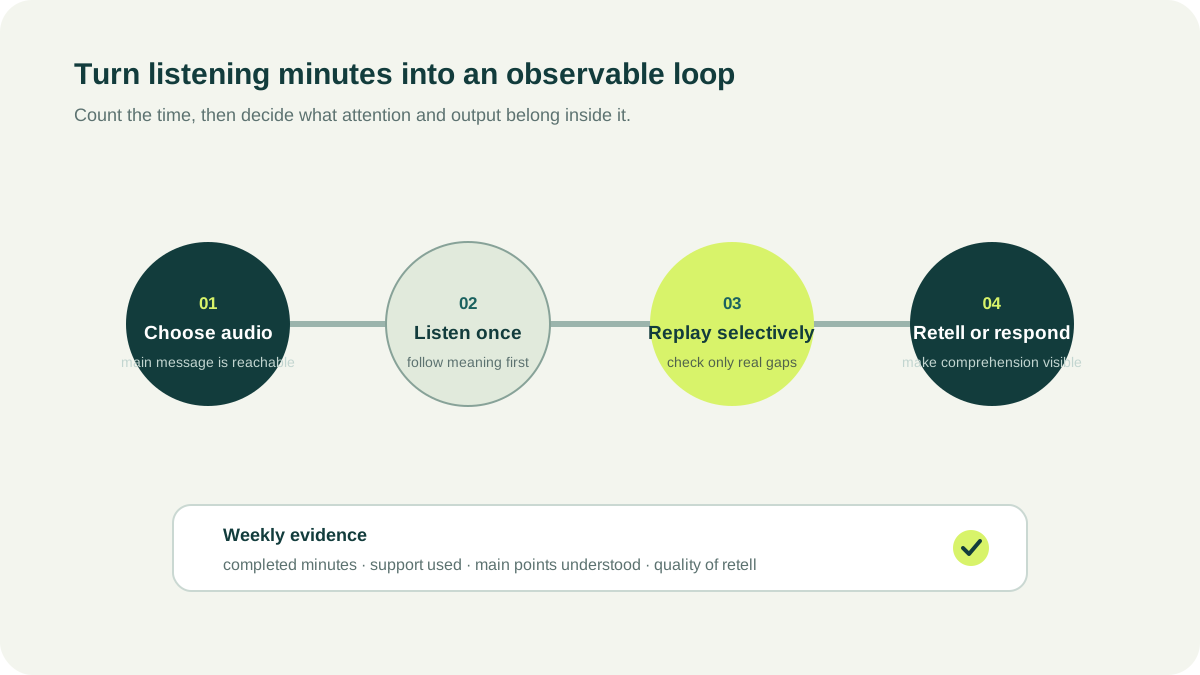
Start with the listening job, not the audio length
The extensive-listening literature describes large amounts of easily comprehensible, enjoyable target-language material used over time, with attention directed mainly toward meaning. A long recording is not automatically extensive listening: a five-minute story can serve the method when it is easy enough to follow, while an opaque hour can become little more than unmanaged noise.
Extensive Reading Central makes difficulty listener-dependent. Instead of labelling a podcast universally beginner or advanced, ask whether this learner can follow it smoothly now. Interest also matters because the method needs return visits, not a single endurance test.
Run a five-minute material-fit test
Sample the actual episode or chapter in the place where you plan to use it. Continue when the main situation remains clear, missed words do not break the next idea and you still want to hear what comes next. Downgrade the material when you repeatedly lose the thread or must stop to reconstruct nearly every sentence.
Do not force one universal comprehension percentage on every format and learner. Use observable friction instead: pauses, transcript rescues, abandoned segments and the accuracy of a short main-point statement. Change one variable at a time—topic, speed, length, accent or support—so the reason for better continuity remains visible.
- Green: the message continues even when some language is missed.
- Amber: a transcript check or second pass restores the message without turning the whole session into analysis.
- Red: stopping, translating or guessing consumes more time than listening; choose an easier item.
Use narrow listening when random variety is too expensive
Stay with one topic, series, presenter or story world for several sessions when every new recording creates too much setup. Repeated names, situations and vocabulary reduce the amount of fresh context that must be built before the message becomes useful.
Narrow listening does not require replaying one file indefinitely. Move through related items while the shared context helps, then widen the speaker, genre or topic after continuity improves. This creates a bridge between one highly familiar clip and completely random native media.
Keep extensive and intensive listening distinct
Open University guidance distinguishes extensive listening for general meaning from intensive listening for specific information. An extensive session protects flow and tolerates some uncertainty. An intensive session may isolate a short segment, replay it, inspect a transcript and investigate why the sound was missed.
Both can belong in one week, but they should not silently become the same task. When every extensive session turns into line-by-line study, choose easier material. When smooth listening repeatedly hides the same sound or phrase problem, move one short passage into a focused block and then return to volume.
Use transcripts and captions as a support ladder
Try a brief first pass for meaning before reading when the material permits it. If the message breaks, use target-language captions or a transcript to locate the gap, then listen again with less visual support. Translation can rescue an essential point, but it should not become the main activity in an extensive session.
Reading while listening can make difficult material reachable, yet the cited review also warns that written support can encourage dependence. Track whether support decreases across familiar material rather than treating the presence of a transcript as proof that listening is improving.
Build a minimum viable week
One editable starting plan is three extensive sessions using a prepared series or topic, plus one short intensive block drawn from a real problem noticed during those sessions. This is a planning example, not a research-established optimum. Change the frequency and length to fit the actual week.
Use the Listening Input Calculator to total planned minutes, then record completed minutes separately. Mark each entry extensive, intensive or background. Background exposure can support a cue or habit, but do not combine it with attended listening as though the conditions were identical.
- Source and item: what was actually heard.
- Completed minutes: not the length of the saved episode or playlist.
- Support: none, captions, transcript, lookup, slower playback or replay.
- Evidence: main point, event order, brief retell or one useful detail.
Choose free or paid support only after the method fits
A public podcast, broadcaster, library audiobook or graded recording can run the routine without another subscription. Pay only when a repeated obstacle—finding suitable material, pairing audio with text, controlling subtitles or returning to a queue—makes the free workflow fail.
LingQ can support a text-and-audio queue; LingoPie can support video-context listening. Neither service makes unsuitable material comprehensible automatically, and both should lose the appointment to a free source when that source is easier to follow and simpler to repeat.
Choose a listening source that protects flow
Try an accessible free podcast or library audiobook first. The reason to pay for support is to keep meaning available without constantly leaving the material. Use the same topic for a focused session and an easier uninterrupted session, then compare how much help each requires.
Affiliate disclosure. Links to LingQ and LingoPie in this decision area are affiliate links. We may earn a commission if you buy through them. This does not affect our recommendations. How we fund the Lab
LingQ: Useful when the bottleneck is following audio beside a transcript and returning to selected phrases. Use less text on a later pass to check whether sound recognition improves.
Explore LingQLingoPie: Useful when visual context helps you follow connected speech. A suitable episode can support listening, but subtitles should not silently turn the whole session into translation reading.
Explore LingoPieDecision criteria
Primary sources
Material claims link to primary or authoritative sources. A link is not an endorsement.
- Ivone & Renandya — Extensive Listening and Viewing in ELT
- Extensive Reading Central — Starting Extensive Listening
- Open University — Extensive and intensive listening
- Open University — Choosing authentic or graded listening material
- LingQ: Official pricing
- LingQ: How LingQ works
- LingQ: Subscription terms
- LingoPie: Supported languages
- LingoPie: Trial terms
- LingoPie: Plans and purchase-channel conditions