Best for
- Buyers budgeting for one-to-one language lessons
- Learners comparing different lesson durations
- Returning students deciding whether a package is worth it
Watch for
- Tutor rates and introductory offers are not platform-wide prices
- A prepaid balance is not the same as lessons already completed
- Payment, cancellation and package conditions must be checked on the actual booking
Documented shortlist
Every merchant destination on this page is an ordinary link. Affiliate availability and commission are not ranking inputs.
italki
DocumentedA marketplace for one-to-one lessons with independent professional teachers and community tutors.
Best fit: Personalised conversation and feedback
Watch: Choosing a tutor requires comparison work
Documented product record
Product facts use the documented vendor records; pricing has its own verification date below. Regional offers may change.
Scroll across to compare product details. Prices and billing terms should be confirmed on the official site.
| Criterion | italki |
|---|---|
| Learning format | tutoring, speaking, structure, listening |
| Languages | 150+ languages are advertised across the tutor marketplace |
| Level context | Potentially A1–C2, depending on the selected tutor and lesson goal |
| Access model | Paid access |
| Free access / trial | Registration is free; private lessons are paid; verify introductory offers with the selected tutor |
| Pricing context | Lesson prices depend on tutor, duration and offer; optional digital memberships are separate purchases |
| Pricing checked | Sep 7, 2026 |
| Billing / renewal context | Availability, price, schedule and lesson structure depend on the tutor |
| Platforms | Web, iOS and Android with video-classroom options |
What is actually priced?
The official italki app listing describes tutor-set rates, pay-per-class booking, credits and lesson packages. It also lists 30-, 45-, 60- and 90-minute class options. The combination available to you depends on the selected tutor and offer.
Consequently, a single average price would conceal too much. Conversation practice, specialist exam preparation and a carefully prepared professional rehearsal are different jobs. Compare quotes for the same job before treating a low entry price as a bargain.
Convert the duration before comparing the price
Use quoted price × 60 ÷ lesson minutes to calculate a time-normalised rate. For illustration only, a $12 half-hour lesson, an $18 forty-five-minute lesson and a $24 hour all equal $24 per scheduled hour. These are invented arithmetic examples, not observed italki offers.
That calculation does not make the experiences equivalent. A shorter session may fit a work break, while a longer appointment may allow a full mock interview and feedback. Pick the usable format first, then compare the cost of equivalent formats.
Build a four-week attendance budget
Count appointments on your actual calendar. At a hypothetical $20 per lesson, one appointment each week for four weeks allocates $80; two each week allocates $160. Add only charges actually shown at checkout and distinguish them from any currency-conversion charge disclosed by your payment provider.
Keep a reserve for trying another tutor if the first match is weak. Spending the whole budget on one large package removes that flexibility before you have evidence that the tutor understands your goal. Four weeks here is a planning window, not an italki billing rule.
When does a package genuinely save money?
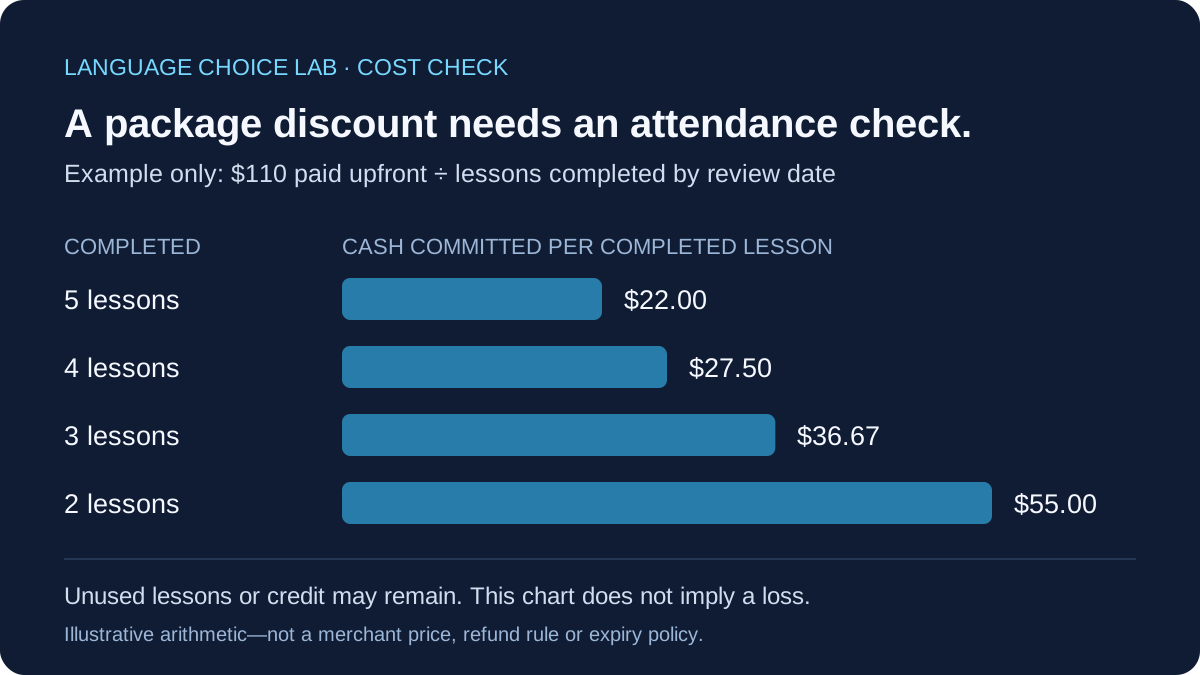
Compare the package total with the price of the same number of equivalent single lessons from that tutor. In an illustrative five-lesson package costing $110 against $24 singles, the nominal saving is $10, provided all five lessons are used on suitable terms.
If only four lessons have been completed by your review date, $110 divided by four is $27.50 of cash committed per completed lesson. That does not mean the fifth lesson has expired or become a loss: unused entitlement may remain. Track both the remaining entitlement and completed learning, rather than calling the full discount a realised saving on day one.
Credits, refunds and cancellation are separate questions
Buying credit, reserving a lesson, cancelling an appointment and ending a package are different actions. Do not assume a rule for one governs the others. Read the terms attached to the current purchase and ask official support to clarify an ambiguous condition before prepaying.
This guide does not assert a universal credit expiry, processing fee, refund entitlement or cancellation deadline. Those details were not sufficiently verified for a blanket statement. A cost guide is more useful when it identifies the unresolved commitment than when it fills the gap with a competitor's rule.
- What amount leaves the payment account now?
- What exact lesson or credit entitlement is purchased?
- What happens if you or the tutor cannot attend?
- What happens to unused package lessons?
- Where is cancellation or support handled?
Keep a subscription offer separate from tutor fees
The US App Store listing also exposes italki Plus in-app purchases. Their existence does not turn every private lesson into an all-inclusive subscription. Check what a particular product actually includes before comparing its price with a tutor's lesson quote.
Use separate budget lines for tutoring and any optional digital membership. Avoid paying for both unless they each have a defined job in the week. A bundled-sounding label is not evidence that unlimited teacher time is included.
Decide what the paid appointment must accomplish
For a conversation goal, bring a short retell and ask for specific corrections. For an exam goal, name the task and scoring framework. For work, supply a non-confidential rehearsal brief. These choices let you assess whether the next paid appointment addresses a real limitation.
Use the Immersion Planner for preparation and review between lessons. If the main gap is basic input and you have nothing to discuss yet, begin with an appropriate course or listening routine. Live tutoring becomes a more deliberate purchase when the job cannot be done equally well in your independent study time.
Decision criteria
Primary sources
Material claims link to primary or authoritative sources. A link is not an endorsement.